In the design of shade for a commercial property, it is not always just about keeping people out of direct sunlight.
Shade can also be used to help cool a building, provide protection for exposed glazing and surfaces from direct sunlight, and in some cases, lower the load on air conditioning.
Not all shade structures will necessarily reduce your energy costs. The placement, direction and form of the shade are important.
What is the effect of shade on heat around a building?
Direct sunlight carries a considerable amount of heat.
That heat is absorbed when it strikes windows, walls, concrete, paving and other exposed surfaces, and can cause temperatures to rise around and within the building over time.
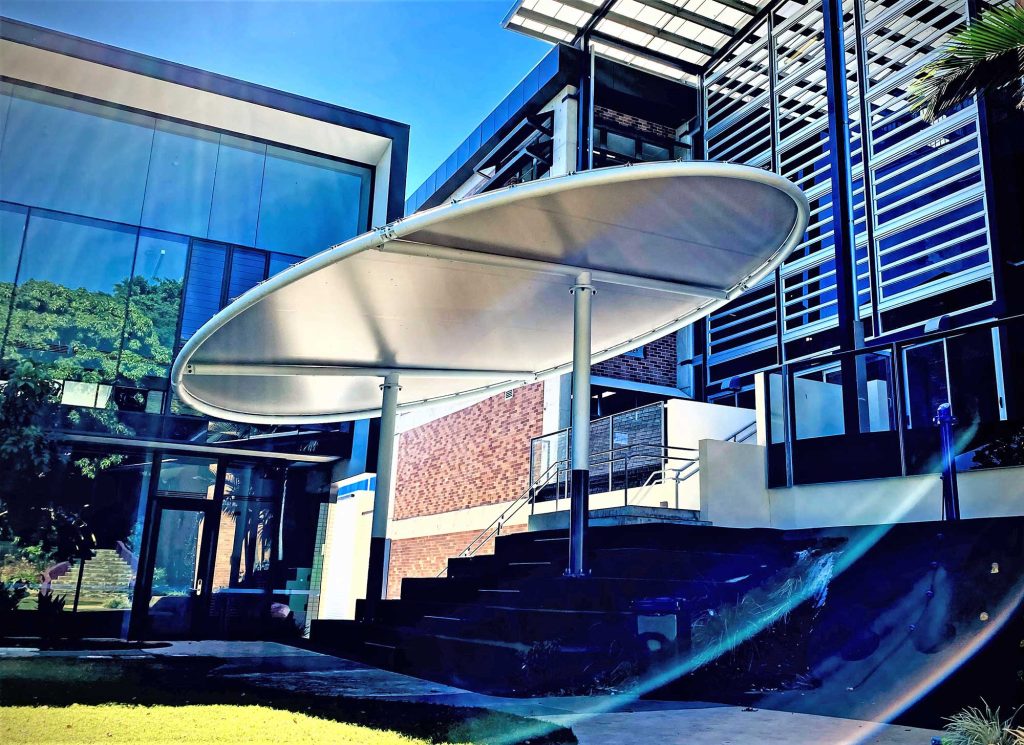
The principle of external shade is to block the sun’s rays from hitting those surfaces.
This can be especially helpful in areas with extensive glazing, entrances, outdoor workspaces and west-facing surfaces that are exposed to strong afternoon sun.
The principle is very simple. Less direct sunlight reaches the building, which means less solar heat for the building and cooling systems to handle.
Can shade reduce air conditioning costs?
Potentially, yes.
When external shading decreases the heat gain into an air-conditioned building, the cooling system may not need to work as hard to keep the interior temperature comfortable.
The impact this has will differ significantly from property to property.
It is influenced by the building orientation, glazing, insulation, air conditioning system and surrounding environment. That’s why we would never recommend installing shade just because it sounds like an energy-saving option.
It must be placed where it can actually make a difference.

Consider the site beyond the building
The building is not always the only area where heat management is required on a commercial property.
Concrete and asphalt surfaces can get very hot after being exposed to the sun all day. The temperature and comfort of a site can also be affected by car parks, pedestrian areas and outdoor spaces.
This is something we see regularly in shopping centre projects.
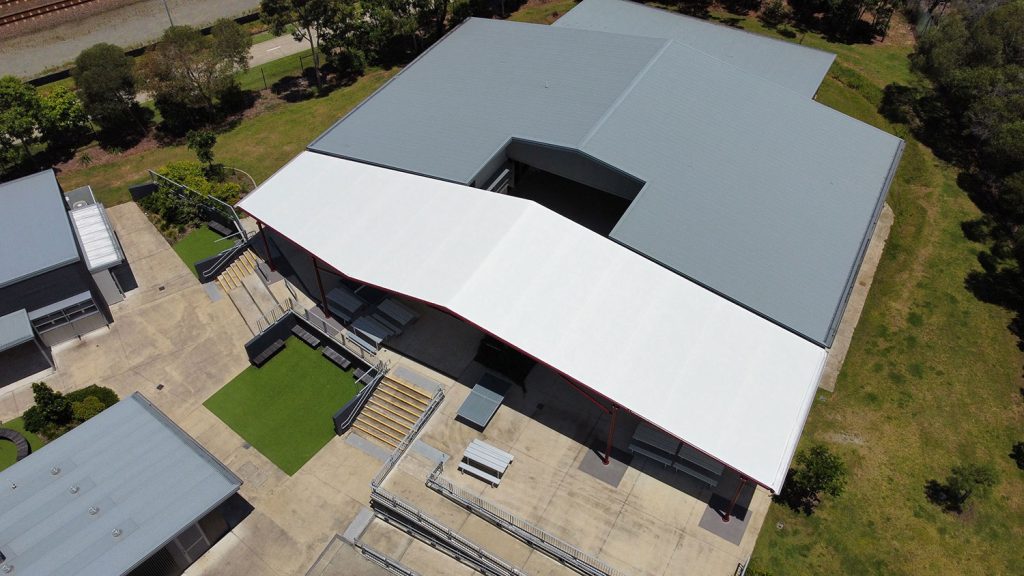
For instance, at Parkhurst Shopping Centre, we have a series of cantilevered shade structures over the car park to create cooler and more comfortable conditions for shoppers and parked vehicles.
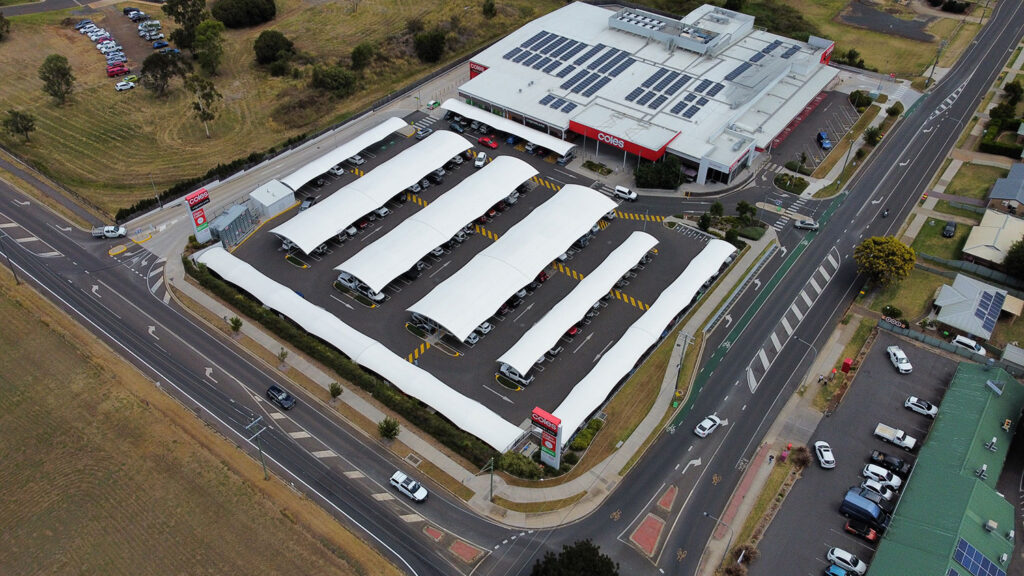
The extensive shade structures over several rows of the car park at Upper Coomera Shopping Centre help to minimise direct sun exposure and heat build-up over a large area of the site.
These projects were not just about covering some cars with a roof. They demonstrate the impact of well-designed shade on the performance and experience of a large commercial outdoor area.
The position of the shade is important
This is likely to be one of the most significant factors. It’s not just about the size of the area that’s covered.
We consider the direction of the sun, what needs to be shaded, when the space is in use and how the shade will work throughout the day.
The height and projection of the structure are important. So too are the orientation of the building and the type of shade being used.
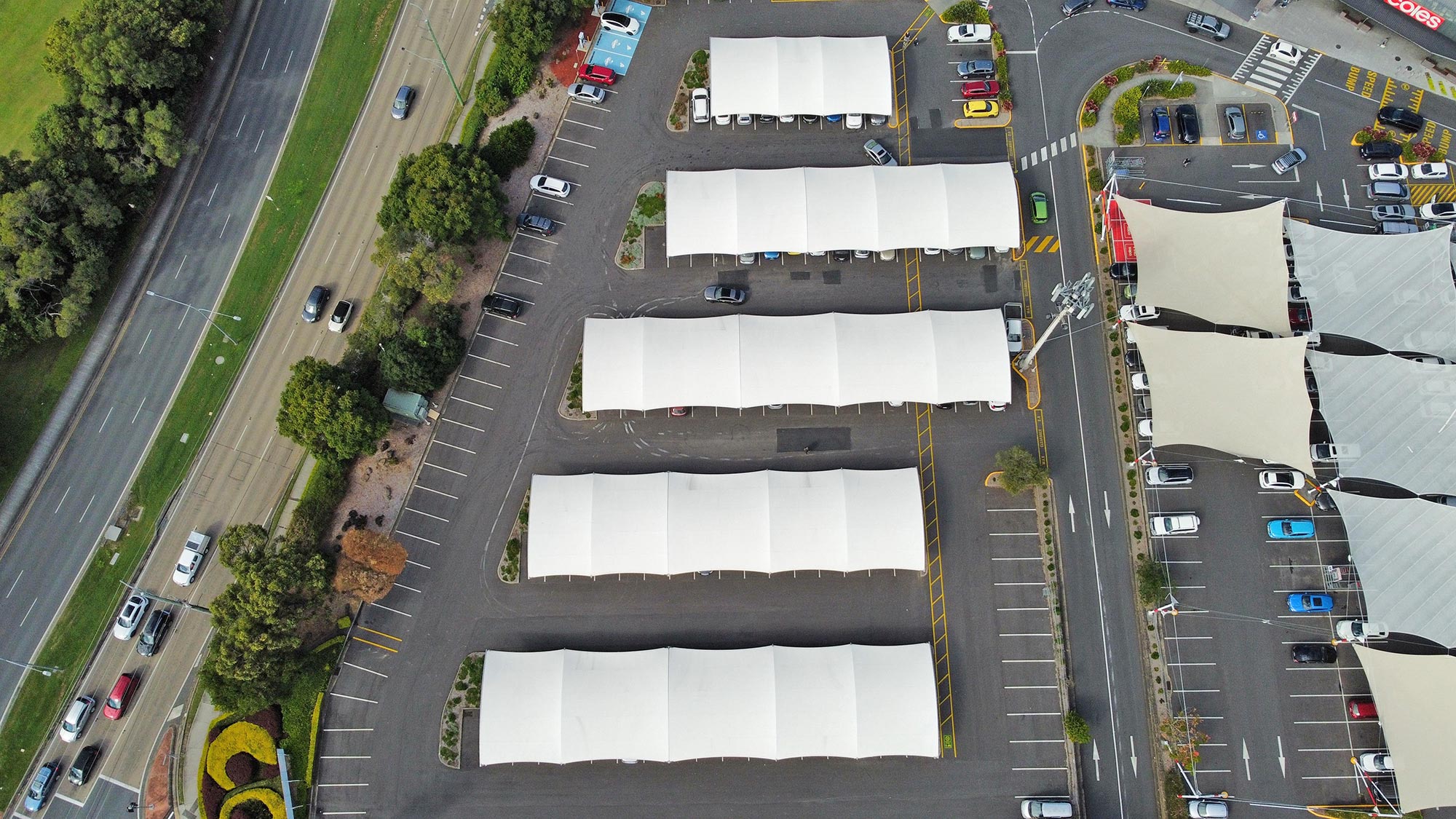
For instance, at the 19th Shopping Centre Car Park on the Gold Coast, a series of large shade sails were installed over the parking bays to offer significant protection from direct Queensland sun, whilst still allowing clearance and usability throughout the car park.
The first step in good shade design is to understand the site and what you want to accomplish.
Shade can enhance more than energy efficiency
There are benefits to reducing heat around a commercial building beyond electricity savings.
Cooler outdoor areas are more usable. Pedestrian areas can be more comfortable to walk through when shaded. Staff, customers and visitors are better protected from direct sunlight during hotter parts of the day, and cars parked under shade are less exposed to direct sunlight.
For many projects, these practical advantages are just as significant as any possible cooling cost savings.
If heat reduction is a key component of the brief, a well-designed commercial shade structure can be integrated into a broader approach to managing shade and heat across the site.
Designing shade around the building
No single shade solution will work for all commercial properties.
The best approach is to look at the building, the surrounding spaces, the sun exposure and how the site is actually used.
If reducing heat or cooling demand is one of the objectives, it should be considered at the beginning of the design process. That allows us to place the shade where it will be most useful, rather than treating heat reduction as a side benefit.
Each shade structure at VECTOR is custom designed to meet the needs of the site. If you are considering improvements to shade, comfort or heat management around a commercial property, talk to our team about what might be appropriate for your site.