Cantilever shade structures are often the right choice when you need shade without posts getting in the way.
That sounds simple, but it is usually where the real design conversation starts.
On commercial projects, the structure needs to do more than cover an area. It needs to work with how people move, how vehicles access the space, how the site is maintained, how the structure handles wind and weather, and how it sits visually with the surrounding buildings.
At VECTOR Shade Structures, we look at all of this before recommending a design. A cantilever structure can be a great solution, but it is not automatically the best option for every site. In some cases, a column-supported structure will be stronger, simpler and more cost-effective. In other cases, moving the posts out of the way makes the entire space work better.
The best shade structure is not the one that looks best on paper. It is the one that works properly on site.
What is a cantilever shade structure?
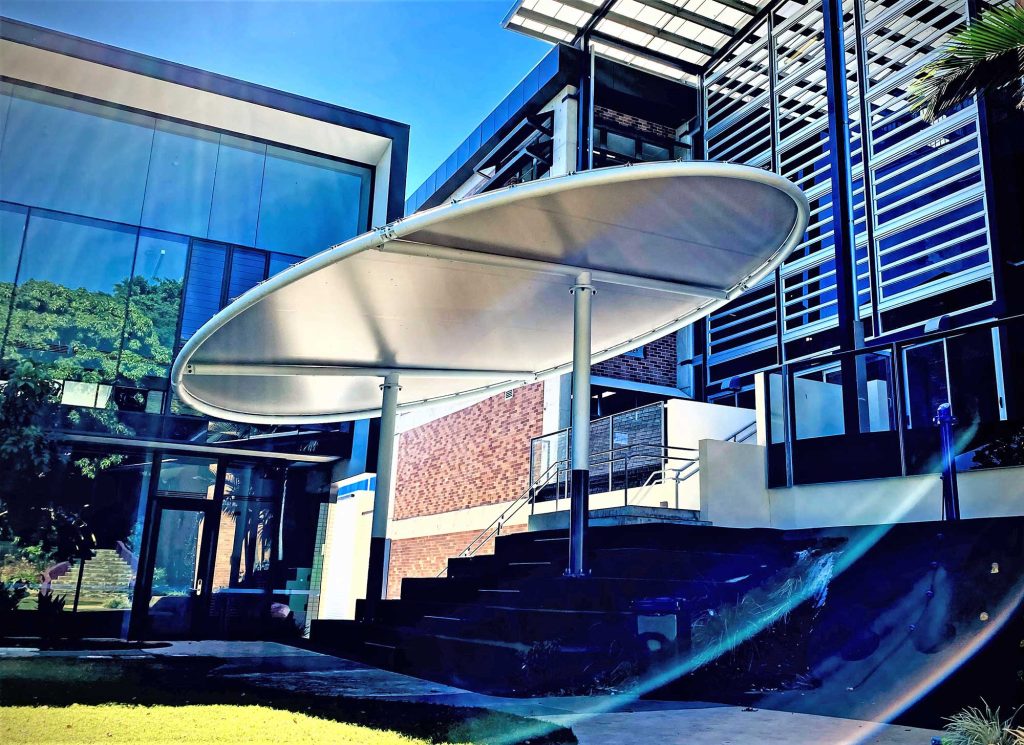
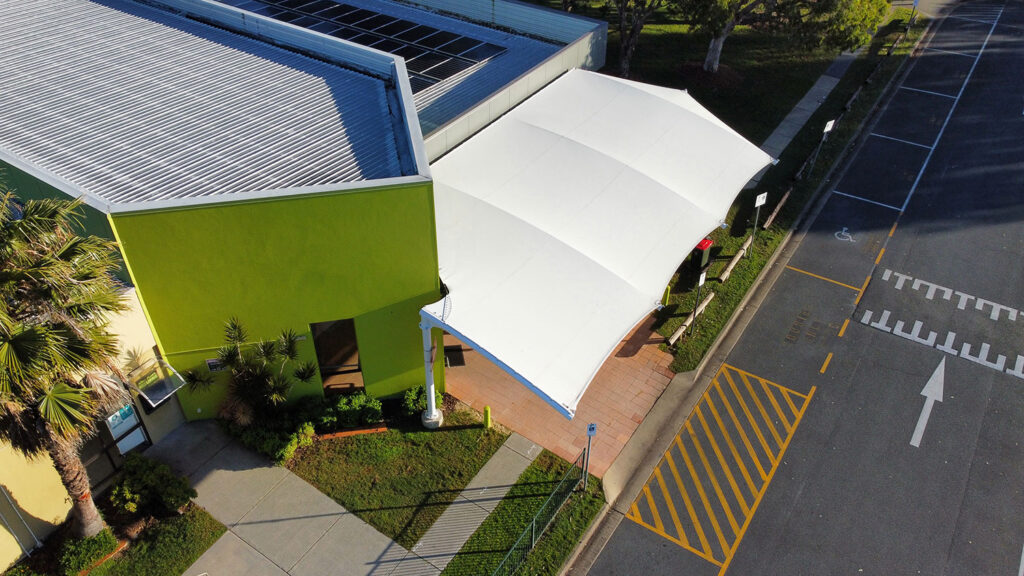
A cantilever shade structure is supported from one side, allowing the canopy or roof area to project out over the space below.
Instead of placing posts throughout the shaded area, the main columns are positioned away from the area that needs to remain open. This can make a big difference in car parks, pool surrounds, school areas, walkways, outdoor seating areas and commercial spaces where access and visibility matter.
The main advantage is clear: fewer obstructions.
That can mean easier vehicle movement, better pedestrian flow, clearer sightlines, more usable space and a cleaner architectural result.
For many commercial projects, that is the reason a cantilever design is considered in the first place.
What is a column-supported shade structure?
A column-supported shade structure uses posts or columns positioned around, or sometimes within, the covered area.
This is a very common and effective way to support larger shade structures. By sharing the load across multiple columns, the structure can often span larger areas more efficiently.
Column-supported designs are commonly used for school COLAs, sports courts, playgrounds, large pool shade structures, outdoor learning areas, covered walkways, public shelters and commercial outdoor areas.
The downside is not the structure itself. It is the placement of the columns.
If posts are positioned poorly, they can interrupt movement, reduce usable space, create access issues or make the area feel cluttered. But when the column layout is planned properly, this type of structure can be durable, efficient and well suited to large commercial shade projects.
The real difference comes down to how the space needs to work
The decision between cantilever and column-supported designs should not start with appearance alone.
It should start with the site.
How will people use the space? Where do vehicles move? Are there clear sightlines that need to be maintained? Are there existing buildings, gardens, paths, pool edges, drainage points or underground services to work around?
A cantilever structure gives you a more open space below, but it also places more demand on the supporting frame, footings and engineering. A column-supported design spreads the load across more points, but those points need to be carefully located.
In our experience, the right answer usually becomes clear once the site layout and daily use of the area are properly understood.
Where cantilever shade structures work well
Cantilever shade structures are a good option when support posts would interfere with the function of the space.
They are especially useful in locations where the shaded area needs to remain open, accessible and visually clear.
Common examples include:
- Car parks and vehicle areas
- Pool surrounds and aquatic centres
- School pick-up zones and walkways
- Clubhouse terraces and outdoor seating areas
- Hospitality spaces
- Pedestrian paths
- Viewing areas
- Public spaces where access and movement matter
The value of a cantilever design is not just that it looks cleaner. It often allows the space to be used properly.
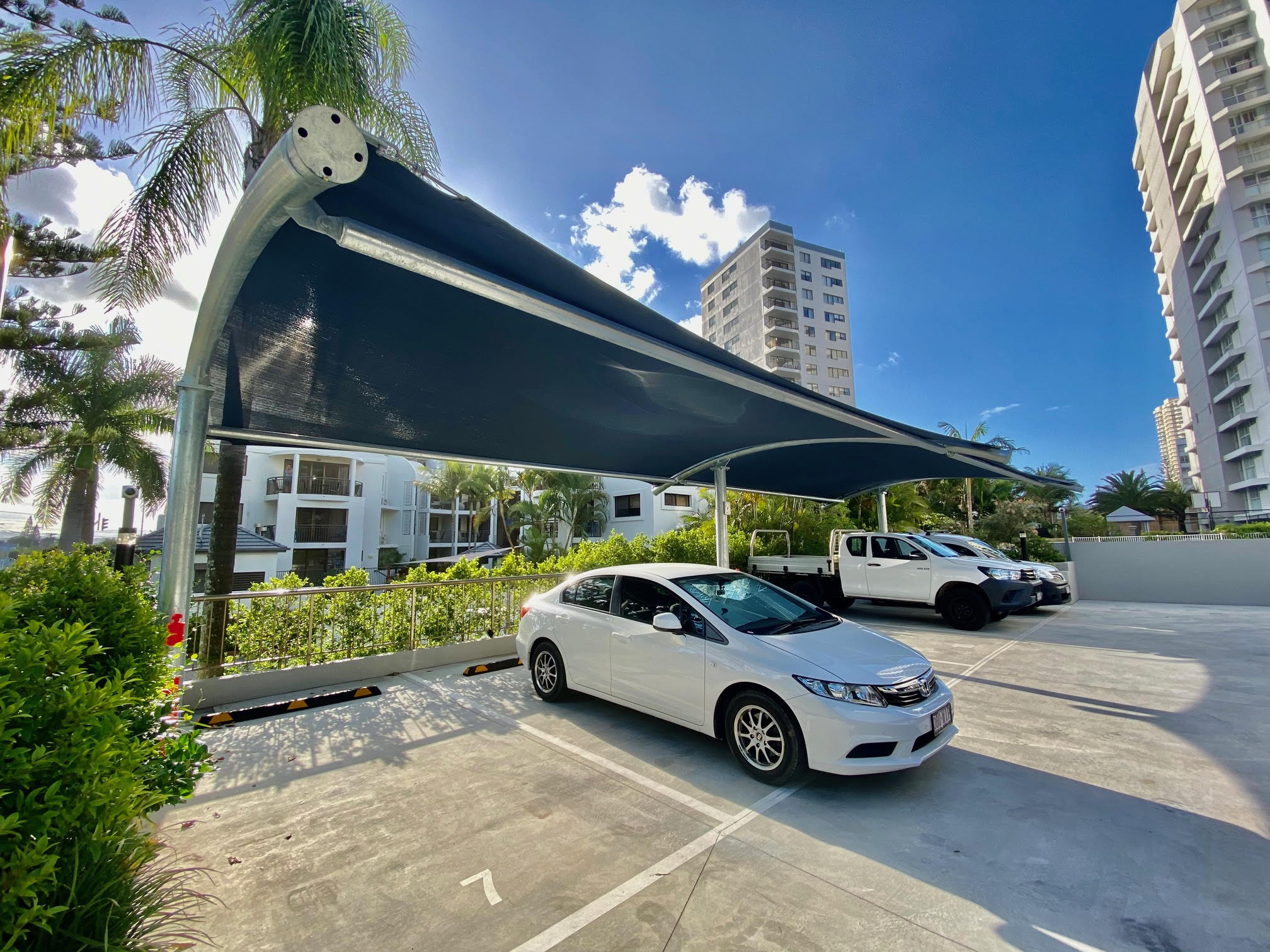
Car parks and vehicle areas
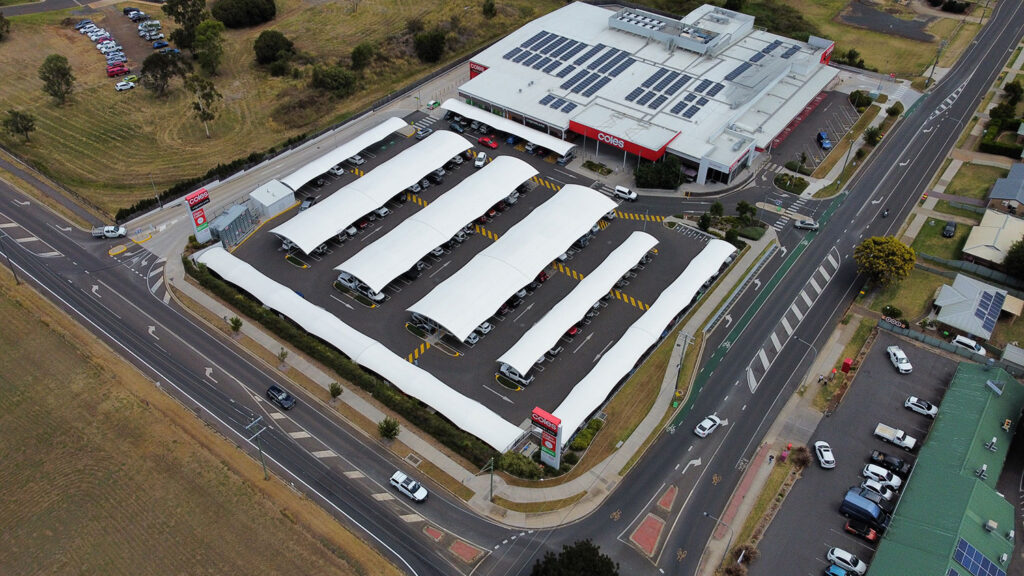
Car parks are one of the clearest examples of where cantilever shade structures can make sense.
In a car park, posts can become a problem quickly. They can affect vehicle doors, reversing space, pedestrian movement and the general usability of the area.
By moving the columns to one side, a cantilever structure can provide shade over parked vehicles while keeping the main parking and movement zones more open.
This is particularly useful for commercial car parks, school drop-off areas, resorts, clubs, shopping centres and public facilities where space is already working hard.
In these environments, fewer posts can make the shade structure feel less intrusive and more practical for day-to-day use.
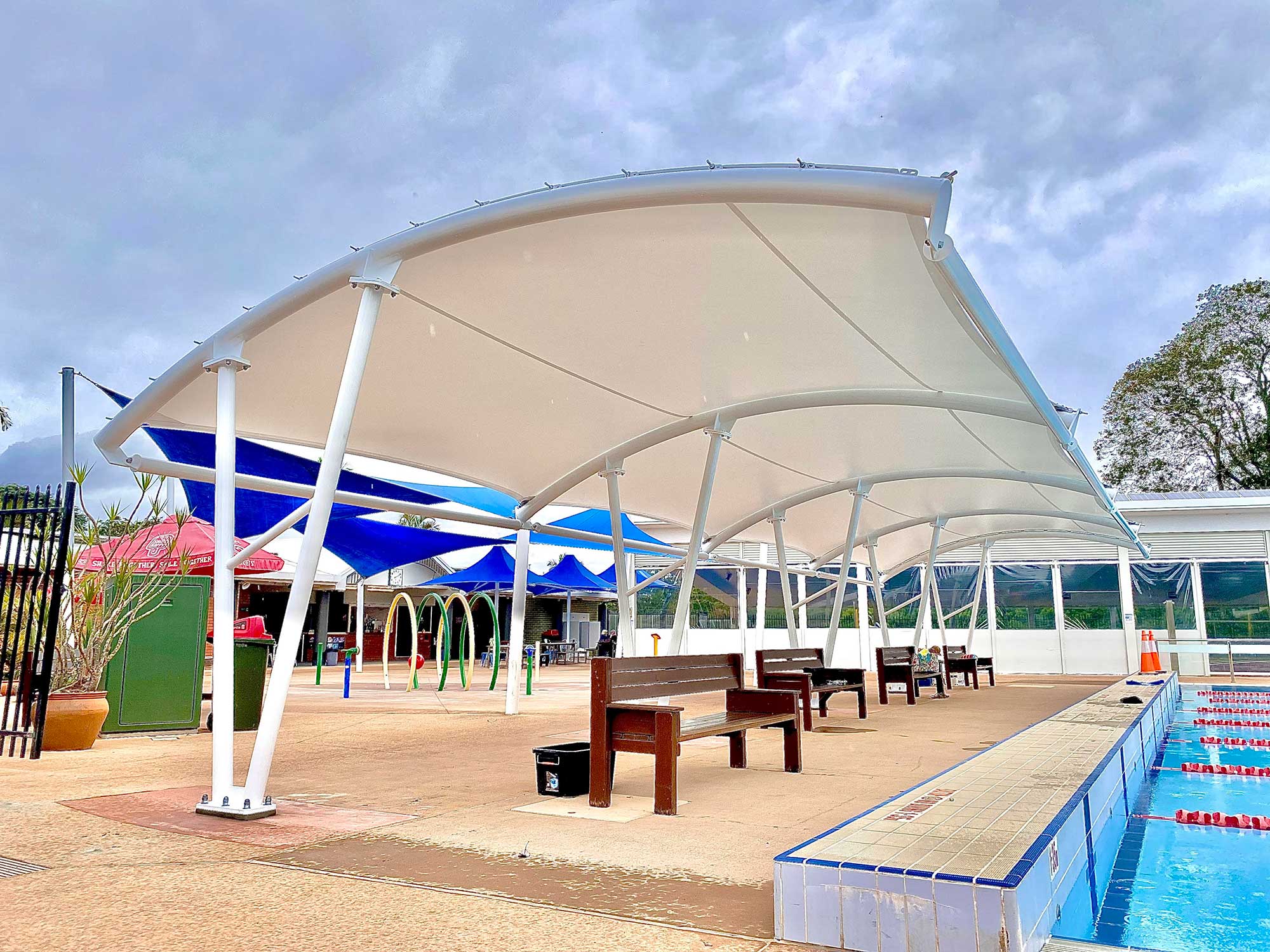
Pool surrounds and aquatic centres
Around pools, the placement of posts needs careful thought.
Pool surrounds often need to allow for supervision, seating, circulation, cleaning equipment, emergency access and clear views across the water. A post in the wrong location can affect both safety and usability.
This is where a cantilever or partially cantilevered design can be valuable. It can help provide shade where it is needed while keeping the poolside area open and easy to move through.
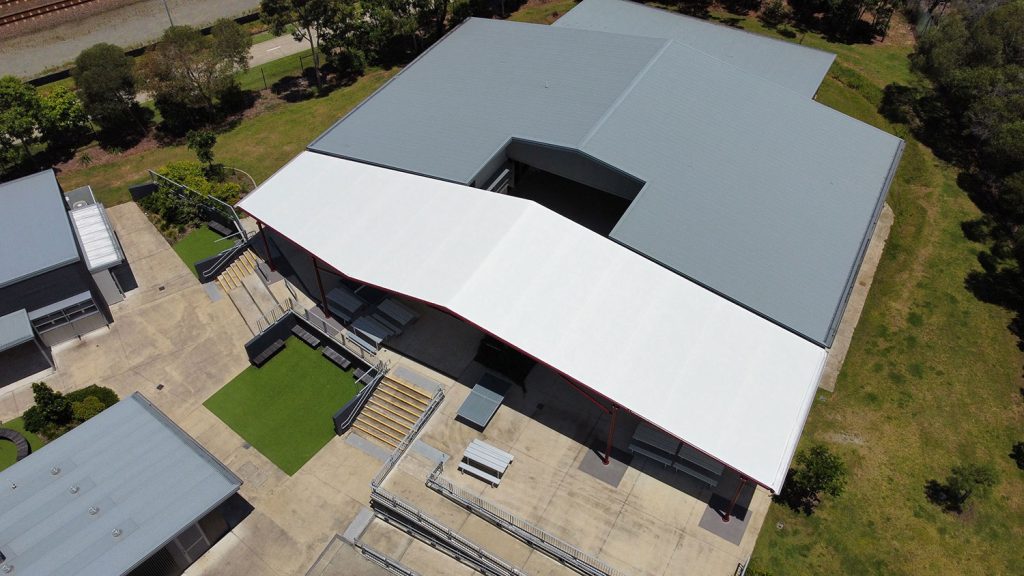
VECTOR’s Somerset College Aquatic Centre project is a good example of a shade structure designed for a demanding aquatic environment. The project used an engineered steel structure with a tensioned waterproof PVC canopy, Serge Ferrari 702S2 fabric with a 15-year warranty, and VECTOR’s QUAD Pro Marine Spec Paint System.
For aquatic centres, the structure type is only one part of the decision. The steel finish, fabric selection, waterproofing, wind load, UV exposure, corrosion risk and ongoing maintenance all need to be considered.
A pool environment can be hard on materials. That is why the details matter.
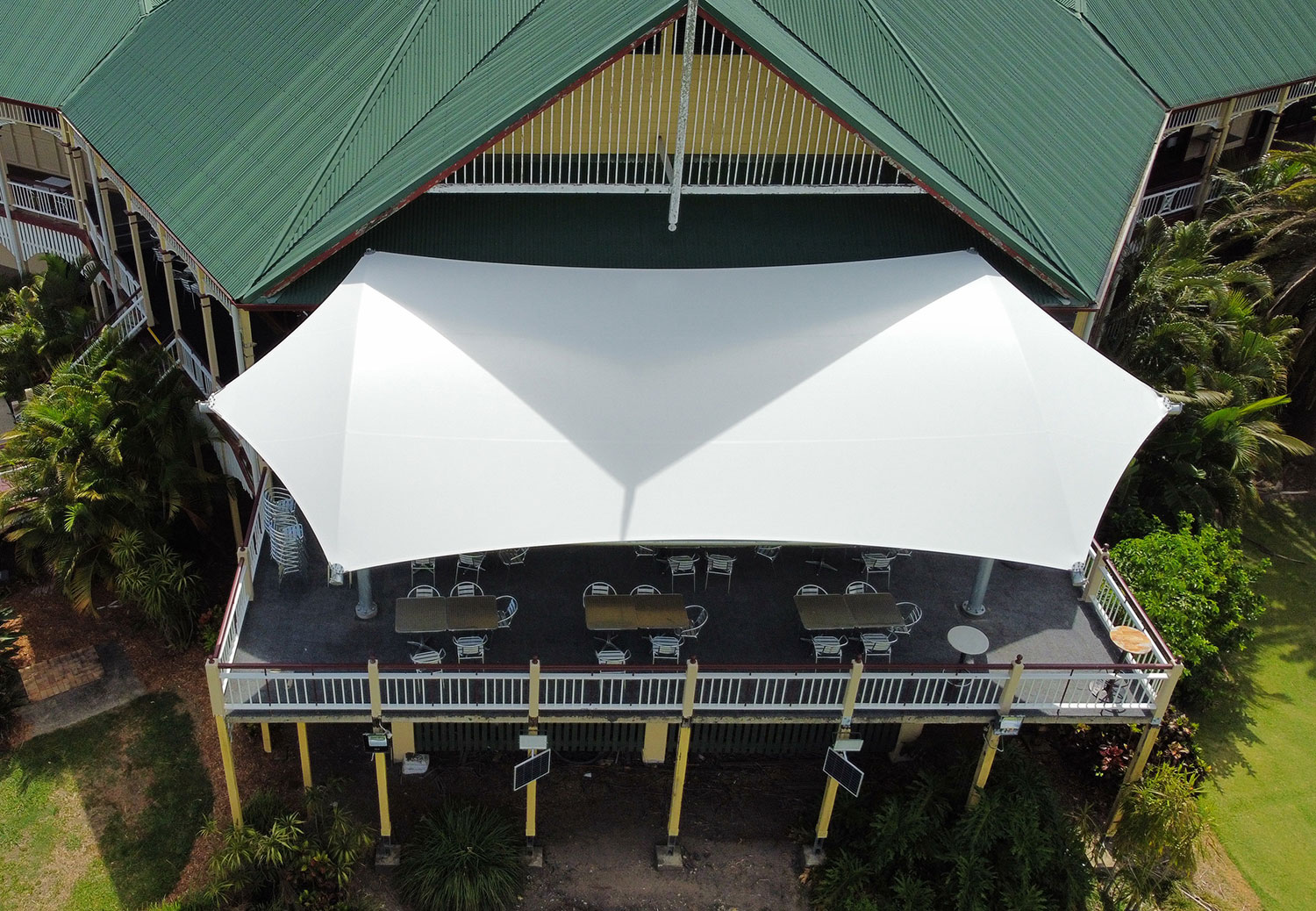
Outdoor seating, clubs and hospitality spaces
Cantilever shade structures can also be a strong choice for outdoor seating areas, terraces, clubhouse decks and hospitality spaces.
In these settings, the goal is often to create shade and weather protection without making the area feel crowded. People still need to move freely. Furniture layouts need to remain flexible. Views often matter. The structure also needs to sit comfortably with the existing building.
The Colonial Golf Club project is a good example of an engineered shade structure integrated into an established leisure and hospitality setting. VECTOR delivered an engineered steel structure with a tensioned waterproof PVC canopy, Serge Ferrari 702S2 fabric with a 15-year warranty, and hot dip galvanised steel.
For clubs and hospitality venues, the structure needs to be practical, but it also needs to feel like it belongs. It should improve the outdoor area without overwhelming it.
Where column-supported designs still make more sense
Cantilever shade structures are useful, but they are not the answer to everything.
There are many projects where a column-supported design will be the better option.
This is often the case when the structure needs to cover a large area, when the span is significant, when wind loads are high, or when the columns can be positioned without disrupting the space.
Column-supported designs can also be more practical when the site allows posts to be integrated neatly into garden beds, fence lines, building edges or existing circulation paths.
In some cases, adding more support points can make the structure more efficient, more stable and more cost-effective.
This is why we would never recommend choosing a cantilever structure just because it sounds more premium. The structure has to suit the job.
What people often underestimate
The biggest thing people underestimate with cantilever shade structures is the engineering behind them.
Because the canopy projects out from one side, the loads need to be properly managed through the frame, connections, columns and footings. This becomes even more important in exposed locations, coastal environments or large-span structures.
A simple-looking cantilever structure can involve a lot of design work behind the scenes.
The same applies to drainage, waterproofing, fabric tension, steel treatment, access for installation and long-term maintenance.
These are not details to sort out later. They need to be considered at the start.
A good shade structure should look clean when finished, but it should also be designed to handle real Australian conditions year after year.
Fabric, steel and finish all matter
The performance of a shade structure is not only determined by whether it is cantilevered or column-supported.
Materials matter.
The right fabric needs to suit the use of the space, the level of UV exposure, whether waterproofing is required, and the desired look of the finished structure.
The steel finish also needs to suit the environment. A structure near a pool, coastline or high-exposure area may need a different finish to a more protected inland site.
Depending on the project, this may include hot dip galvanising, marine-grade coating systems or other protective treatments.
For Somerset College Aquatic Centre and Colonial Golf Club, VECTOR used Serge Ferrari 702S2 fabric with a 15-year warranty, paired with engineered steel structures and tensioned waterproof PVC canopy systems.
Those decisions are not just about appearance. They affect how the structure performs, how it ages and how much maintenance it may need over time.
Cost considerations
Cantilever shade structures can sometimes cost more than column-supported designs because the structure has to work harder from one side.
The steel, footings and engineering may all need to be more substantial, depending on the span and site conditions.
That does not mean a cantilever design is poor value.
In many cases, the benefit is not just the shade. It is the usability of the space underneath. If removing posts improves access, safety, traffic flow, seating flexibility or the overall experience of the area, the additional investment can make sense.
On other projects, a column-supported design may deliver the best result for the budget.
The right comparison is not simply “which one is cheaper?” It is “which structure gives the best long-term outcome for this site?”
Choosing the right shade structure for your project
Before deciding on a cantilever or column-supported design, we would usually look at questions like:
- How will the space be used every day?
- Are vehicles, pedestrians or equipment moving through the area?
- Would posts create access, safety or visibility issues?
- How large does the shaded area need to be?
- What are the local wind and weather conditions?
- Is the site near a pool, coastline or corrosive environment?
- Does the structure need to be waterproof?
- Can the columns be integrated into the surrounding layout?
- What finish and fabric will suit the environment?
- How should the structure connect visually with nearby buildings?
These questions help guide the design properly.
They also help avoid one of the most common mistakes in shade structure projects: choosing a structure type before understanding the site.
So, when should you choose a cantilever shade structure?
A cantilever shade structure is often the right choice when you need shade over an area that has to remain open.
That could be a car park, pool surround, walkway, school area, hospitality space or commercial outdoor zone where posts would reduce the function of the space.
A column-supported design may be the better option when you need to cover a larger area efficiently, or where the columns can be placed without creating problems.
At VECTOR Shade Structures, our approach is to design around the site, not force a standard structure into place.
Whether the right answer is a cantilever shade structure, a column-supported design or something custom in between, the goal is the same: a durable, practical and well-resolved structure that works for the people using it.
If you are planning a commercial shade project and are unsure which design is right for your site, speak with VECTOR. We can assess the space, talk through the options and help design a shade structure that performs properly in Australian conditions.