When you’re designing a commercial shade project, you’ll need to decide whether to use a tensile structure or a hard roof.
On the surface, they both provide shade and weather protection. But they are actually very different in terms of design, performance and use.
It’s important to get this right from the start to avoid wasted time and money.
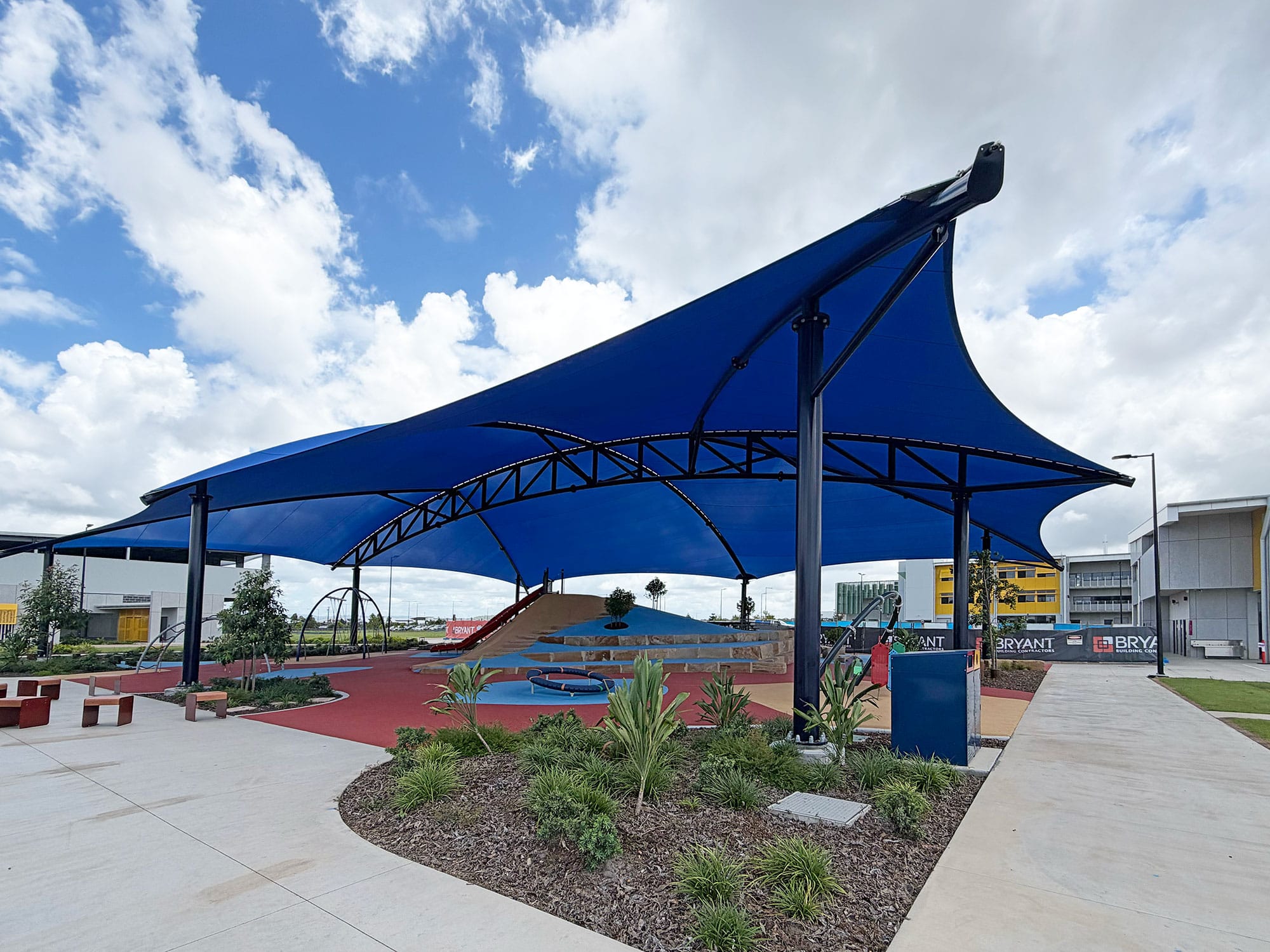
What is a tensile structure?
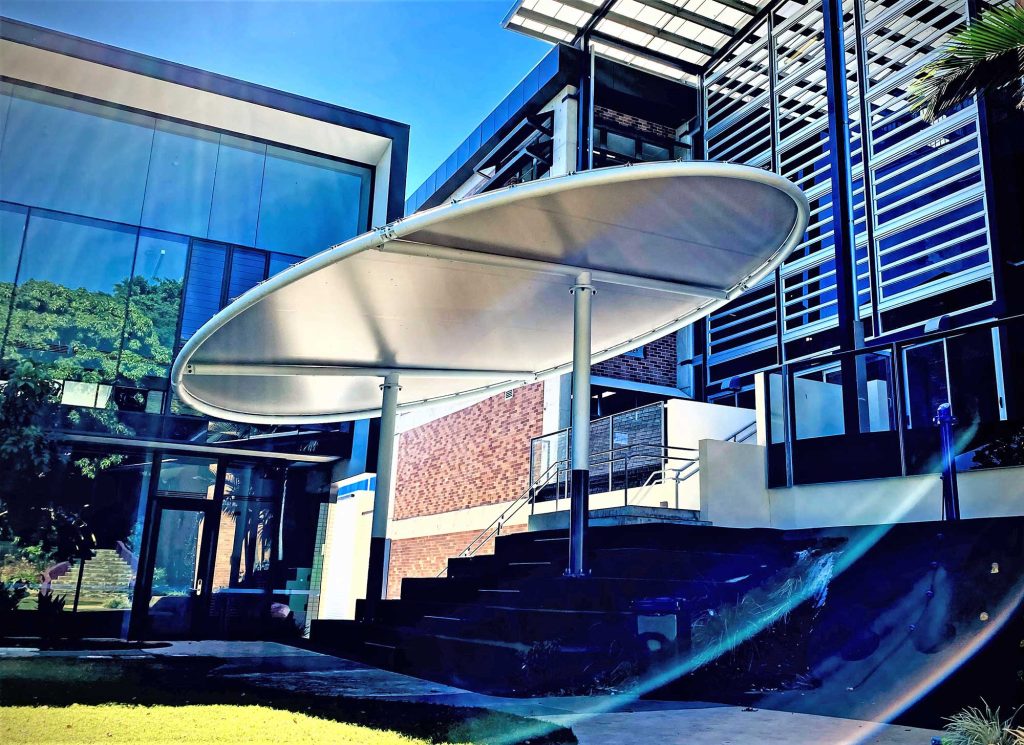
A tensile structure is a stretched membrane (usually PVC or PTFE) that is tensioned over a steel structure.
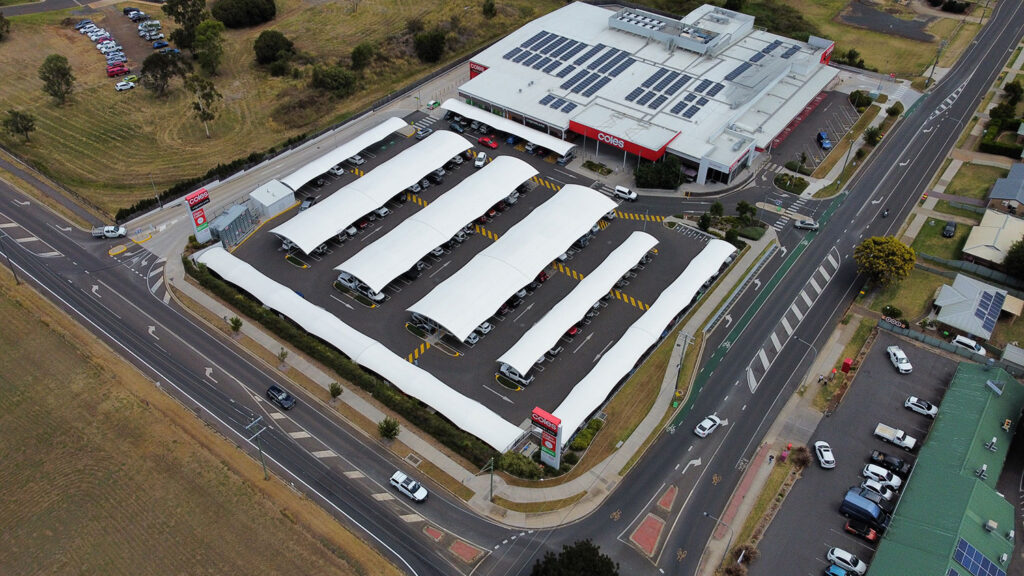
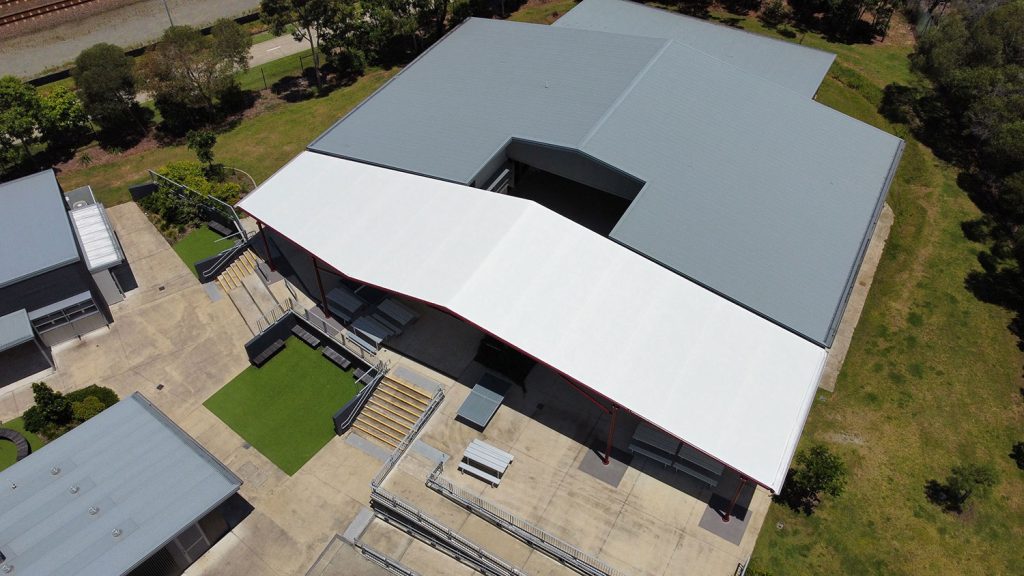
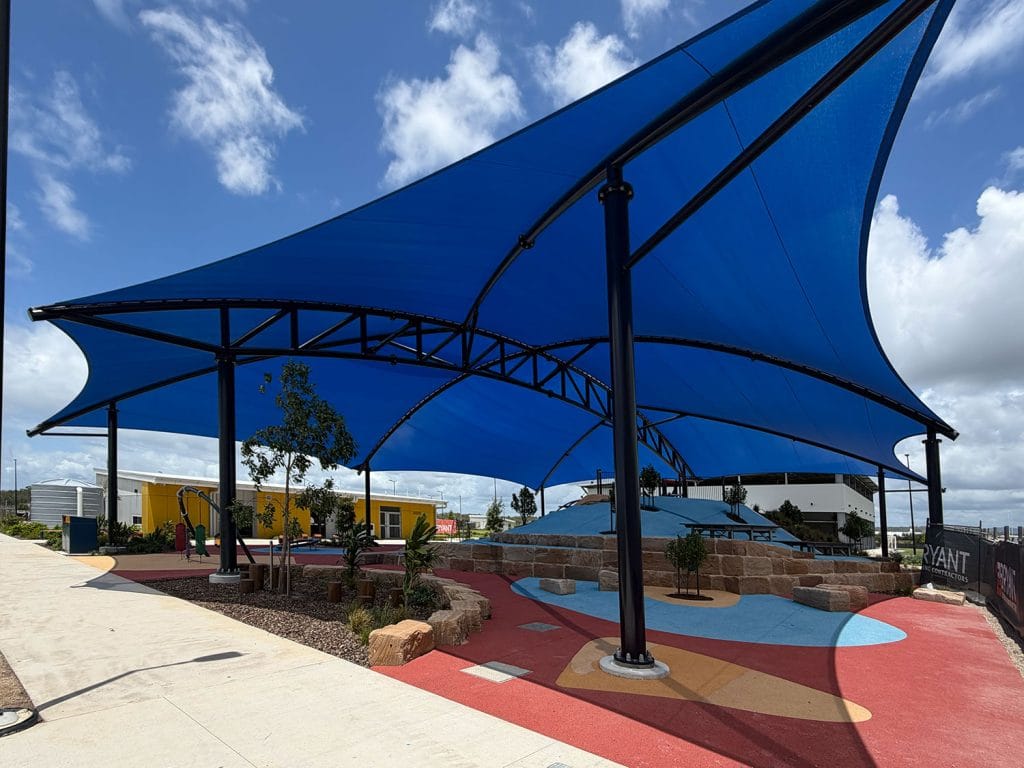
These structures are lightweight, flexible and attractive. They are commonly used in schools, swimming pools and public buildings where ventilation and daylight are critical.
The tensioned fabric allows the structure to be strong through shape and engineering rather than bulk.
This allows for large spans with minimal structural bulk.
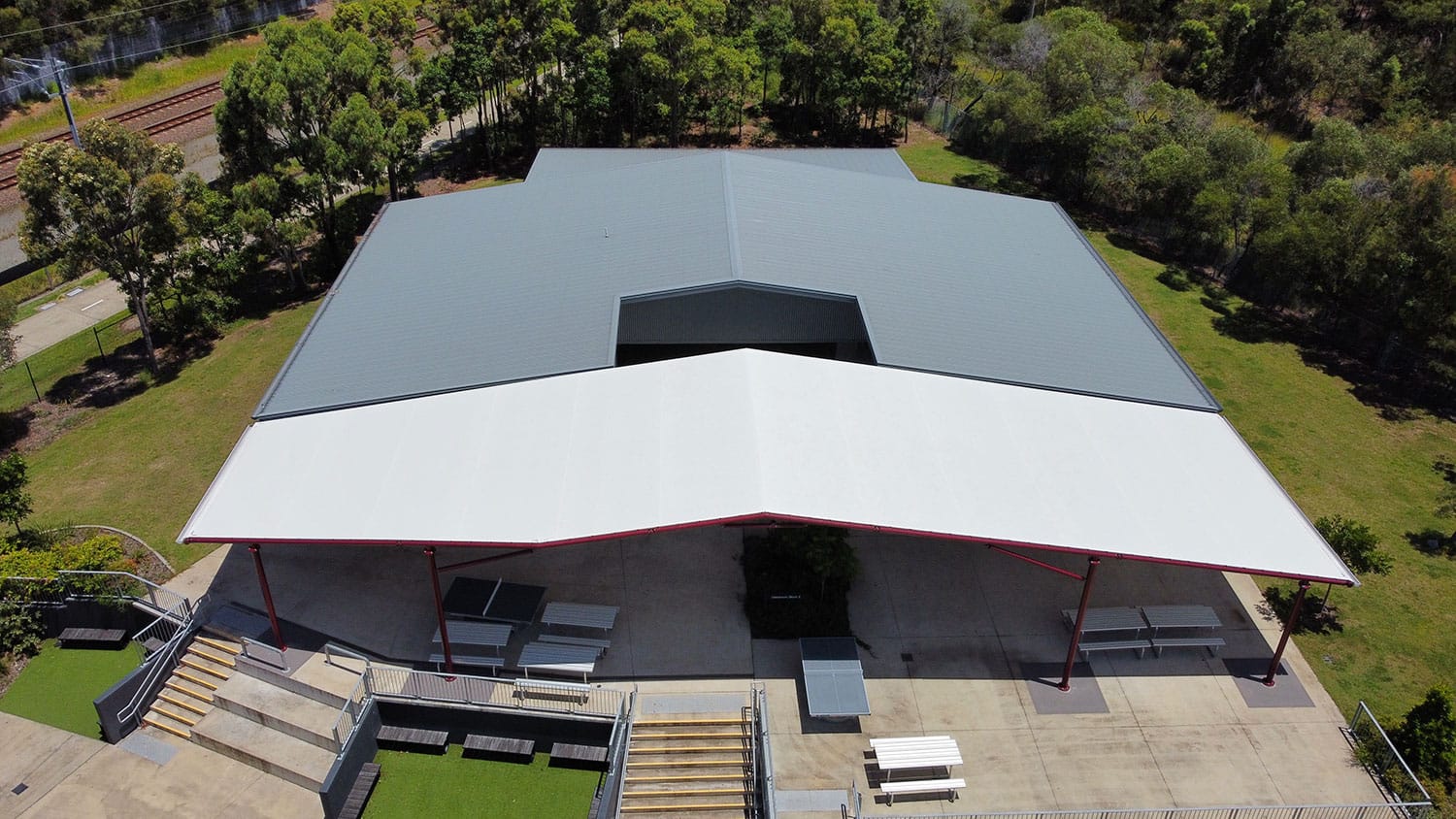
What is a hard roof structure?
A hard roof structure is constructed from solid roofing materials like metal sheets, insulated roof panels or other solid roof systems.
These are more conventional in design and aim to offer complete protection from the elements.
Hard roof structures are generally heavier and need more support than tensile systems, but they provide a different type of strength and environmental control.
Key differences in performance
The main difference is in the way they deal with light, ventilation and weather.
Tensile structures allow natural light to filter through the membrane. This results in a light and airy space with no glare. They also help to keep the space cooler, making them ideal for warm climates.
Hard roof structures block light completely. This provides complete shade and improved rain protection, but can create a darker and more claustrophobic environment if not well designed.
If waterproofing is essential, both systems can be made waterproof but tensile structures need careful membrane choice and detailing to be successful.
Design and visual impact
Tensile structures are selected for their design. The smooth lines and curves give a more contemporary, stylish look.
They can turn a functional shade requirement into a feature.
Hard roof structures are typically more understated. They’re ideal for projects where function, uniformity or harmony with existing structures are important.
But with careful design they can still be stylish.
Cost and construction considerations
There’s no simple answer to cost. It varies greatly with size, complexity and location.
Tensile structures may be more economical for large spans because they are lightweight and require less steel.
Hard roof systems may be more expensive in terms of material and structural costs, but can be more durable in some conditions.
Installation methods also differ. Tensile systems require precise tensioning and specialist installation, while hard roof systems follow more conventional construction processes.
Which option is right?
It comes down to how the space will be used.
If you want a lighter, more open feel, a dramatic aesthetic, and a high degree of coverage for a large space, a tensile structure may be the right choice.
If you want full weather protection, a more solid feel, and to connect with other structures, a hard roof structure might be the better choice.
So, what do you choose?
There’s no simple answer. There are times for both tensile and hard roofs in commercial buildings.
It comes down to how they perform, and how that matches up with your site, budget and aspirations.
If you get that right, the structure becomes more than just shade. It becomes part of the building.